
Many homeowners only think about gutters when there’s a problem. During Arkansas storm season, though, gutters are essential for keeping heavy rain from collecting around your home’s foundation.
Arkansas gets an average of 49.8 inches of rain each year. In Northwest Arkansas, most summer rain comes from thunderstorms that can also bring hail and strong winds. These storms really test your gutter system, just when it needs to move more water away from your home.
How gutters protect your foundation is by collecting rainwater from the roof and sending it away from the house through downspouts. If gutters overflow, water soaks the soil around your foundation. This causes the expansive clay soil in Arkansas to swell and push against the foundation.
Over time, this stress can damage your foundation and cause crawl space moisture. Cleaning your gutters, adding downspout extensions, and ensuring proper grading around foundation walls all help move water away. A quick, no-pressure inspection before storm season can catch small issues before they become big problems.
Why Arkansas Storm Season Is Hard on Foundations
The Rainfall Reality
Summer thunderstorms in Arkansas put your gutters to the test. A storm that brings heavy rain can dent gutters, loosen fasteners, or pull sections away from your house. The National Weather Service recorded damaging straight-line winds in the state, including a 68-mph gust in Jonesboro.
In Northwest Arkansas, most of the annual average of 49.8 inches falls during thunderstorms, which can also bring hail and strong winds.
Regular gutter maintenance in Little Rock can help you find sagging sections, leaks, and loose parts before storm season. Homeowners considering gutter installation in Springdale or checking gutters in Jonesboro, AR should also inspect the system after hail or strong winds.

Regular gutter maintenance in Little Rock can help you find sagging sections, leaks, and loose parts before storm season. Homeowners considering gutter installation in Springdale or checking gutters in Jonesboro, AR should also inspect the system after hail or strong winds.
The Volume a Roof Sheds
One inch of rain over one acre produces more than 27,000 gallons of water. Your roof is much smaller, but it can still collect hundreds of gallons of water from an inch of rain.
All that water flows into just a few downspouts. If your gutters aren’t working right, water collects next to your house. Good foundation drainage in Arkansas means moving roof runoff away from the foundation instead of letting it pool nearby.
How Water at the Foundation Does Its Damage
Expansive Clay: The Arkansas Multiplier
Expansive clay soil in Arkansas shrinks and swells as its moisture level changes. That movement can put enough pressure on concrete foundations to cause cracking. Repeated shrink-and-swell cycles can lead to significant damage over time.
Gutter overflow foundation damage starts when water repeatedly soaks the same spot of soil. Each storm adds more moisture next to the foundation.
Erosion and Pooling
Soil washed away below a gutter or downspout is more than just a cosmetic problem. Runoff can erode soil away at the base of gutters. Once a low spot forms, water is more likely to collect there during the next storm.
You can often spot clogged gutters foundation problems by checking the ground below the gutter or downspout. Look for channels in the soil, standing water after rain, or damp spots that stay wet after the rest of the yard dries.
Crawl Space Consequences
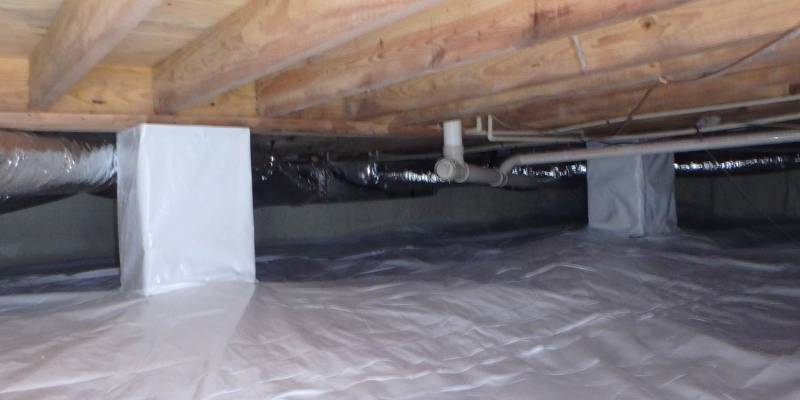
Downspout water should be directed far enough from the house to keep your basement and crawl spaces dry. When runoff collects near the foundation, crawl space moisture can remain long after the rain passes and start causing problems.
Constant moisture can also harm the insulation under your home. Fixing drainage problems and considering crawl space encapsulation tackles the root cause, not just the symptoms.
The Pre-Storm-Season Gutter Checklist
Clean and Inspect
Clean and inspect your gutters at least twice a year, and more often if you have trees nearby. The best time to schedule a cleaning is before spring and summer storms start.
When it rains, look at your gutters from the ground to see if they’re working. Signs of poor drainage include water spilling over the edge, leaking at the seams, or running behind the gutter.
Extend the Downspouts
Downspout extensions help carry runoff away from the foundation. The University of Arkansas Cooperative Extension Service recommends using an extender or splash guard to direct water to an area where it can soak into the ground.
Put splash blocks firmly under the downspouts and aim them away from your house. If water still pools near the foundation, move the blocks or add extender tubes. There’s no exact distance; just make sure water goes far enough to keep the area around your home dry.
Check the Grade
The grading around your foundation should slope away from the house. Fill in any low spots near downspouts and splash blocks so water doesn’t collect there after a storm.
Repair Storm Damage Promptly
After hail or strong winds, look for gutters that are dented, sagging, cracked, or coming loose. If your gutters are getting old, it may be a good time to see how long gutters last in Arkansas.
Frequently Asked Questions

Protect Your Home Before the Next Storm
To protect your foundation in Arkansas, start with good drainage. Make sure to have clean gutters, working downspouts, downspout extensions, splash blocks, and ground that slopes away from your house.
Storm season comes every year, and a quick inspection can catch many gutter problems before they cause damage. G&S Insulating provides gutter installation and service in Little Rock, Springdale, and Jonesboro. Schedule a gutter inspection before the next storm.