
Updated June 2026
Most Arkansas homeowners only think about their gutters when something goes wrong, such as overflowing water during a heavy storm, stains forming on the siding, or a sagging section visible from the driveway. The assumption is that gutters should quietly last 20+ years as the marketing suggests.
But Arkansas’s humid climate and nearly 50 inches of annual rainfall wear down gutter systems faster than many homeowners realize. By the time a problem becomes obvious, gutters have often been underperforming for years, allowing water to reach fascia boards, siding, crawl spaces, and the soil around the foundation.
So, how long do gutters last in Arkansas? In Arkansas’s humid subtropical climate, a properly installed aluminum gutter typically lasts 10 to 15 years, much shorter than the 20-year national rule of thumb, because of the state’s high rainfall totals and prolonged humid conditions. Copper gutters can last 40 to 50+ years, while vinyl gutters generally last 10 to 20 years. Regardless of material, proactive maintenance significantly extends lifespan.
The clearest signs to replace gutters include rust spots, holes, sagging sections that pull away from the fascia, peeling paint near the gutter line, water stains on siding or foundation areas, and overflow during moderate rain.
Not sure whether your gutters still have life left or if it is time for replacement? A professional gutter assessment can give you a clear answer before the next heavy Arkansas storm.
Why Arkansas’s Climate Wears Gutters Down Faster
Arkansas weather is hard on exterior systems, and gutters take constant abuse year-round. According to U.S. Geological Survey data, Arkansas receives an average of 49.8 inches of annual precipitation, with some regions receiving even more. The National Weather Service Little Rock office reports that all three of the company’s service areas — Little Rock (Pulaski County), Springdale (Washington County), and Jonesboro (Craighead County) — experience significant precipitation along with frequent thunderstorms, occasional ice storms, and prolonged humid conditions from spring through early fall. Between heavy thunderstorms, humid summers, seasonal debris, and occasional ice events, gutters in Arkansas face conditions that accelerate wear. The climate in these areas creates several challenges for gutter systems:
- Sustained moisture exposure accelerates corrosion on metal gutters and seal failure at joints
- Heavy storms deliver large amounts of leaves, twigs, and shingle grit into the gutter system
- Humid shaded areas allow algae and organic buildup to hold moisture against the gutter material
- Winter freeze-thaw cycles place stress on seams, hangers, and downspout connections
Over time, these conditions shorten the overall gutter lifespan Arkansas homeowners can realistically expect.
That is why professional rain gutter installation and replacement matters. Proper slope, drainage planning, and material selection make a major difference in how long a system performs before replacement becomes necessary.
How Long Each Gutter Material Actually Lasts in Arkansas
 Aluminum Gutters
 Aluminum Gutters
Aluminum remains the most common residential gutter material because it is lightweight, rust-resistant, and relatively affordable. Nationally, homeowners are often told that aluminum gutters last around 20 years.
In Arkansas, a more realistic expectation for an aluminum gutter lifespan is 10 to 15 years. Heavy rainfall, humidity, and debris loads place greater stress on the system than in drier climates. Thicker-gauge aluminum gutters, especially 0.032-inch or heavier material, tend to perform better and last longer.
Copper Gutters
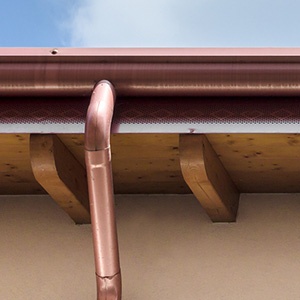
Copper gutters are the longest-lasting option available. Properly installed copper systems routinely last 40 to 50+ years, even in humid climates. Over time, copper develops a protective patina that helps resist corrosion.
The upfront investment is significantly higher, but the lifespan often exceeds that of many other exterior components on the home.
Vinyl Gutters
Vinyl gutters generally last between 10 and 20 years. They are inexpensive upfront but tend to become brittle over time from UV exposure and weather fluctuations.
In Arkansas, vinyl systems may struggle during intense rain events and are more vulnerable to cracking and separation than metal systems.
Why Installation Quality Matters as Much as Material
Material matters, but installation quality often determines whether gutters reach the upper or lower end of their expected lifespan.
A properly installed system should include:
- Correct slope toward the downspouts to prevent standing water (commonly cited as a quarter-inch of fall per 10 feet of run)
- Adequate downspout sizing and placement for the roof area being drained
- Hidden hangers spaced properly to support heavy rain loads
- Sealed seams or seamless construction to reduce premature joint failure
Poor installation can shorten the life of even premium gutter materials.
Five Warning Signs Your Gutters Are Failing
The National Park Service’s Preservation Brief 39 on controlling unwanted moisture lists faulty gutters — including missing or damaged sections, poor flashing condition, and visible deterioration — as one of the most common signs of moisture damage in a building. Most failing gutters show warning signs before they fail completely. Catching these issues early can help homeowners avoid larger repair costs.
1. Rust Spots, Peeling Paint, or Holes
Small rust patches and pinholes allow water to leak onto fascia boards and soffits. Once rust becomes structural instead of surface-level, replacement is usually the better option.
2. Sagging Sections or Gutters Pulling Away From the Fascia
Visible sagging usually means the hangers have failed, the fascia board has started rotting, or the gutter system is overloaded with debris and standing water. Common problems like gutter sagging or rust holes should not be ignored because they usually indicate broader system deterioration.
 3. Water Stains or Mildew Below the Gutter Line
 3. Water Stains or Mildew Below the Gutter Line
Peeling paint, mildew, or water stains on the siding below the gutters are strong indicators that overflow or leakage has occurred repeatedly during rain events.
4. Soil Erosion Around the Foundation
When water spills directly beside the home rather than exiting through downspouts, it erodes the mulch and soil along the foundation perimeter. Over time, that excess moisture can contribute to crawl space and foundation problems.
Proper drainage plays a major role in long-term crawl space protection and overall moisture control.
5. Overflow During Moderate Rain
If water overflows the gutter during routine rainfall, the system is clogged, undersized, improperly sloped, or nearing failure.
Maintenance That Buys You Years
Failing gutters do not stay a roof problem for long. They eventually become siding, foundation, and moisture problems throughout the home. The University of Arkansas Cooperative Extension Service notes that roofs act as impervious surfaces concentrating stormwater, and redirecting that water away from the building is essential to managing runoff and protecting both the structure and the surrounding soil.
In Arkansas, maintenance discipline matters just as much as material quality. A neglected gutter system may fail years early, while a properly maintained system can significantly outlast expectations.
How Often Should Gutters Be Cleaned in Arkansas?
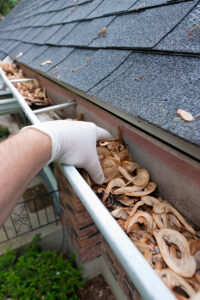 West Virginia University Extension notes that gutters must be kept clear of leaves, sticks, and other debris to function properly, and that consistent maintenance prevents corrosion and the gradual loosening of gutters from their mountings. The National Park Service’s exterior-maintenance preservation guidance specifically identifies keeping gutters and downspouts cleared of debris as one of the highest-priority regular maintenance activities for any building. At a minimum, Arkansas homeowners should clean gutters twice per year:
- Late spring, after pollen, seeds, and storm debris settle
- Late fall after leaves drop
Homes surrounded by oaks, pines, or sweetgums may need three or four cleanings annually.
Following a regular gutter cleaning schedule is one of the simplest ways to extend gutter lifespan.
Other Maintenance Habits That Extend Gutter Lifespan
- Inspect gutters during moderate rainfall to observe overflow or drainage issues
- Verify downspouts discharge at least 4 feet from the foundation, ideally 6 to 10 feet
- Re-seal small leaks at sectional joints before they worsen
- Address rust spots quickly with the appropriate primer and paint
- Trim overhanging branches to reduce debris buildup and impact damage
- Consider gutter guards on heavily wooded properties, as they reduce cleaning frequency but do not eliminate it
Frequently Asked Questions
How long do aluminum gutters last in Arkansas?
A properly installed, properly maintained aluminum gutter typically lasts 10 to 15 years in Arkansas’s humid subtropical climate — shorter than the 20-year figure often cited nationally. Thicker-gauge aluminum (0.032 inch or heavier), correct slope, and consistent cleaning push that lifespan toward the upper end of the range. Thin-gauge aluminum, poor slope, or skipped cleanings shorten it.
When should I repair my gutters versus replace them?
Repair makes sense for isolated issues — a small leak at a seam, a single sagging section with intact gutter material, or a clogged downspout. Replacement is the right call when rust or holes appear in multiple sections, when sagging is widespread, when peeling paint and water staining indicate prolonged overflow, or when the system is approaching the end of its expected lifespan and showing multiple warning signs at once.
Can I extend the life of my gutters?
Yes, and meaningfully. Twice-yearly cleaning (more often if surrounded by trees), prompt repair of small leaks and rust spots, verifying proper slope toward downspouts, and ensuring downspouts discharge well away from the foundation can add 5 to 10 years to the life of a typical aluminum gutter system in Arkansas.
Do gutter guards extend gutter lifespan?
Indirectly, yes. Gutter guards reduce — but do not eliminate — debris accumulation, which means less standing organic matter, less weight stress on hangers, and longer intervals between full cleanings. They are particularly worthwhile on heavily wooded properties. Homeowners should still inspect under the guards annually because shingle grit and fine debris still accumulate.
How often should I clean my gutters in Arkansas?
At a minimum, twice a year — late spring and late fall. Properties with overhanging trees, recent storm events, or visible signs of overflow should be inspected and cleaned more frequently. The most reliable indicator is observation during a moderate rain: if water cascades over the front edge of the gutter, it needs attention regardless of the date on the calendar.
Protect Your Home With the Right Gutter System
Arkansas weather is hard on gutters. What separates a 10-year gutter system from a 20-year one is rarely just the material itself. Long-term performance comes from proper installation, the right material for the climate, and consistent maintenance over time.
If your gutters are more than 10 years old, showing rust spots or sagging, or overflowing during routine rain, a professional inspection can help determine whether repair or replacement makes more sense for your home.
Ready to protect your home from water damage? Contact G&S Insulating today to schedule a free estimate for gutter installation or replacement in Arkansas.
References:
National Park Service. “Holding the Line: Controlling Unwanted Moisture in Historic Buildings — Preservation Brief 39.” By Sharon C. Park, U.S. Department of the Interior, https://www.nps.gov/orgs/1739/upload/preservation-brief-39-controlling-moisture.pdf.
National Weather Service. “NWS Little Rock, AR — Climate Data.” National Oceanic and Atmospheric Administration, U.S. Department of Commerce, https://www.weather.gov/lzk/wxcntl3.htm.
Pugh, Aaron L., and Drew A. Westerman. “Mean Annual, Seasonal, and Monthly Precipitation and Runoff in Arkansas, 1951–2011.” Scientific Investigations Report 2014-5006, U.S. Geological Survey, 2014, https://pubs.usgs.gov/publication/sir20145006.
University of Arkansas Cooperative Extension Service. “Rain Gardens and Stormwater — Fact Sheet FSA-9533.” University of Arkansas System Division of Agriculture, https://www.uaex.uada.edu/publications/PDF/FSA-9533.pdf.
West Virginia University Extension. “Gutter Safety.” West Virginia University, https://extension.wvu.edu/community-business-safety/home-safety/gutter-safety.