
For many Arkansas homeowners battling soaring summer energy bills and winter drafts, the energy fix may seem obvious: add more insulation on top of what is already in the attic. Whether that strategy works depends entirely on what is currently up there and what you plan to add.
Layering new insulation over old material that is damp, moldy, pest-damaged, or hiding air leaks does not solve the problem. It traps it. The wrong material pairing can also restrict vapor movement and create condensation inside the assembly, which, over time, can contribute to wood rot and structural damage.
In this guide, we’ll take a closer look at the popular question of adding new insulation over old. While it’s true that you can often add new insulation over existing insulation, we’ll explore how to determine whether your existing insulation is truly ok to keep, whether the new insulation is compatible with the old, and the R-value targets for your Arkansas climate zone.
Can You Add New Insulation Over Existing Insulation?
In most cases, yes, you can add new insulation over existing insulation, provided the existing layer is in good condition and the materials are compatible. While adding more insulation is an ideal way to reduce your energy bills, simply adding more R-value on top of compromised insulation will not deliver the savings you are after. Condition and compatibility always come before quantity.
Insulation works as a thermal barrier that slows heat flow moving into and out of your home, easing the load on your HVAC system. In Arkansas’s hot, humid summers and cold winters, that means steadier indoor temperatures and lower heating and cooling costs. It also helps control moisture movement, which matters in our humid climate. Monitoring indoor humidity helps manage the conditions that contribute to mold growth, wood rot, and structural damage. Denser insulation can also dampen sound transmission between floors and rooms.
What to Check Before You Add Insulation
The most important step before adding insulation over existing attic insulation is to have a professional evaluate what is already there, including any compressed attic insulation that may have lost R-value over time. The Department of Energy (DOE) advises checking the condition of your existing insulation and addressing air leaks and moisture issues before adding more.
Use the chart to see where your attic stands before moving forward.
Insulation and air sealing work as partners, not substitutes. Remember to address air sealing before insulating. Sealing attic-floor penetrations, top plates, and bypasses before adding insulation is what unlocks real energy savings.
| What is the state of your current insulation? | What do the experts say? |
|---|---|
| It’s dry and intact. |
Go for it! But be sure to consider the type of existing insulation and its R-value to determine the best approach. |
| It’s wet, moldy, or damaged. |
Stop! Remove and replace existing insulation so you won’t exacerbate problems and render the new insulation ineffective. |
| It has signs of pests. |
Stop! Pests can damage your insulation and create health hazards. Investigate and eliminate the source of the infestation before adding new insulation. |
| It’s compressed or settled. |
Maybe. Compressed insulation doesn’t provide adequate R-value. Consider adding new insulation to achieve the recommended levels for your climate zone. |
| I’m not sure what type it is. |
Maybe. Ask a professional to identify the insulation, ensure it’s compatible with new materials, and doesn’t contain asbestos or other harmful chemicals. |
| I have air leaks and/or ventilation issues. |
Stop! For optimal performance and to prevent moisture issues, address these underlying problems before adding new insulation. |
For homes built before the 1980s, some older insulation products may contain asbestos and should never be disturbed by the homeowner. The Environmental Protection Agency (EPA) advises leaving suspected asbestos-containing material intact and untouched until a trained professional can assess it.
Once assessed, if your old attic insulation is wet, moldy, pest-damaged, or hazardous, insulation removal from your Arkansas home should happen first to clear the way for a fresh start.
Matching Compatible Materials
Not every insulation type can be safely used over another. Here is how the three materials homeowners are most likely to consider stack up, with a little insulation guidance from the DOE.
Blown-In (Loose-Fill Fiberglass or Cellulose)
Affordable and well suited to topping off an attic, blown-in insulation over existing material fills to a uniform depth and can be added over existing blown-in or batt insulation. It is the most straightforward way to reach a higher R-value without starting over.
Batt Insulation (Fiberglass Rolls or Pre-Cut Batts)
Installing batt insulation over existing batt material only works when the new batts are unfaced. The choice of unfaced vs faced batt insulation matters because a faced batt includes a vapor retarder. Placing that facing on top of existing insulation puts a vapor barrier mid-assembly, where it can trap moisture. Lay new unfaced batts perpendicular to the existing layer to cover gaps.
Spray Foam Insulation
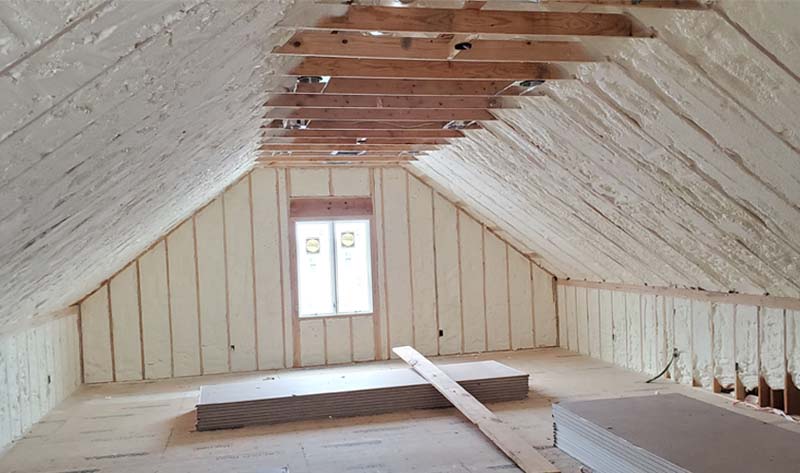
Many people wonder, can you put spray foam over old insulation? The answer is no. For spray foam to deliver excellent air sealing and moisture resistance, it needs to bond to a clean substrate to expand and seal correctly. Sprayed over old insulation, it can leave gaps and voids that undercut its own performance, so any existing insulation must be removed first. Determining the right spray foam thickness for your Arkansas home depends on your climate zone and whether you choose open-cell or closed-cell foam.
How Much Insulation Arkansas Homes Need
Arkansas is not in a single climate zone, but two. Most of central and southern Arkansas, including Little Rock and Jonesboro, sits in climate zone 3A, a warm, humid zone. The northern tier of the state, including Springdale and Northwest Arkansas, sits in climate zone 4A, a mixed humid zone.
That climate zone split changes your target. Arkansas’ Energy Code requires new and remodeled homes to have a minimum attic (ceiling) insulation level of R-30 for both climate zones 3 and 4. ENERGY STAR guidelines recommend higher levels of insulation R-values Arkansas homeowners should truly aim for to maximize their home’s energy efficiency. For zone 3, ENERGY STAR recommends a level of R-49 for an uninsulated attic or R-38 with 3-4 inches of insulation already in place. For Zone 4, they recommend R-60 for an uninsulated attic or R-49 with 3-4 inches already in place.
Most Arkansas homes built before or around 2010 fall short of these targets, which is why topping off sound attic insulation ranks among the highest return upgrades a homeowner can make.
Frequently Asked Questions
Condition and Compatibility Come Before Quantity
Adding new insulation over old insulation is often the right, cost-effective move. But don’t forget condition and compatibility before quantity. Confirm your existing layer of insulation is dry, intact, and pest-free. Take care of air sealing and moisture problems before installation and ensure you match compatible materials.
Don’t let outdated or inadequate insulation keep costing you comfort and energy. G&S Insulating provides tailored insulation solutions to homeowners across Arkansas, including Little Rock, Springdale, and Jonesboro. Our expert team can inspect your existing insulation, handle removal where needed, and recommend the right material and R-value for your climate zone. Contact us today for a free evaluation.
References
ENERGY STAR. “Methodology for Estimated Energy Savings from Sealing and Insulating.” U.S. Environmental Protection Agency, www.energystar.gov/saveathome/seal_insulate/methodology.
ENERGY STAR. “Recommended Home Insulation R–Values.” U.S. Environmental Protection Agency, www.energystar.gov/saveathome/seal_insulate/identify-problems-you-want-fix/diy-checks-inspections/insulation-r-values.
ENERGY STAR. “Rule Your Attic! For Comfort and Savings.” U.S. Environmental Protection Agency, https://www.energystar.gov/saveathome/seal_insulate/rule_your_attic#:~:text=Making%20sure%20your,an%20insulation%20contractor.
UpCodes. “Arkansas Energy code 2009.” https://up.codes/viewer/arkansas/iecc-2009/chapter/4/residential-energy-efficiency#402.1.1
U.S. Department of Energy. “Adding Insulation to an Existing Home.” Energy Saver, Office of Energy Efficiency and Renewable Energy, www.energy.gov/energysaver/adding-insulation-existing-home.
U.S. Department of Energy. “Building America Climate-Specific Guidance.” Office of Energy Efficiency and Renewable Energy, www.energy.gov/cmei/buildings/building-america-climate-specific-guidance.
U.S. Department of Energy. “Insulation.” Energy Saver, www.energy.gov/energysaver/insulation.
U.S. Department of Energy. “Types of Insulation.” Energy Saver, www.energy.gov/energysaver/types-insulation.
U.S. Environmental Protection Agency. “Protect Your Family from Exposures to Asbestos.” EPA, www.epa.gov/asbestos/protect-your-family-exposures-asbestos.
University of Arkansas System Division of Agriculture. “Cooperative Extension Service — Home Energy and Insulation.” University of Arkansas, www.uaex.uada.edu.