
Arkansas weather is as varied as its terrain. Yet whether you’re in the mountains or on the plains, moisture is a constant challenge for homeowners. Our hot, humid summers and abundant rainfall year-round bring constant moisture that threatens the health and safety of our homes.
Enter crawl space encapsulation. It is a highly effective solution for moisture control and should be a priority for Arkansas homeowners. What are the benefits of crawl space encapsulation? Encapsulation helps keep moisture from entering your home and protects it from chronic moisture damage. With added insulation and air sealing it also improves your home’s indoor air quality, deters pests, and saves energy for lower energy bills. Let’s take a deeper dive into this important upgrade for your home.
What is Crawl Space Encapsulation?
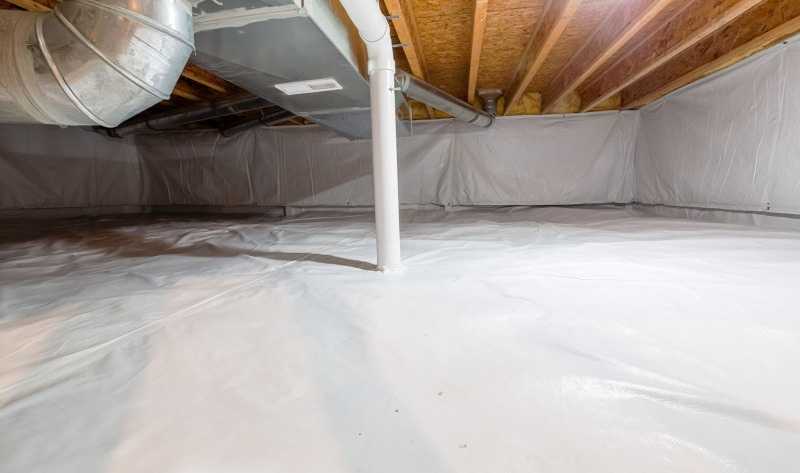 Encapsulating a crawl space is the process of sealing off the crawl space from the outdoor environment. It involves sealing vents and gaps, installing a thick vapor barrier, and insulating the walls. This turns your damp, vented crawl space into a dry, controlled space under your home.
The process includes covering your crawl space floor with a thick plastic sheeting (usually 6-mil or thicker) and sealing all the seams and edges. This helps stop moisture from entering through the ground and protects your home’s structural integrity and air quality.
Why Crawl Space Encapsulation Matters in Arkansas
Our state’s humid subtropical climate means that warm, moist air easily enters a traditional vented crawl space. From there it condenses on cooler surfaces like ductwork and floor joists. With Central Arkansas getting around fifty inches of rain a year, this extra moisture creates the perfect conditions for mold growth, rusted components, and structural damage.
This moisture can also invite pests, such as termites, into your home. These insects thrive in damp conditions and can easily lead to a pest infestation. When you encapsulate your crawl space, you block the pests’ entry points, and create a drier, healthier environment under your house.
Benefits of Crawl Space Encapsulation
Moisture Control and Mold Prevention
Moisture control is the foundation of a healthy crawl space and a healthy home. In our humid climate, a properly closed crawl space provides much better moisture control than a vented space. In fact, it can help prevent up to 15 gallons of water vapor per day from seeping in through unsealed floors and walls. That’s a big deal when it comes to preserving your home’s structural integrity by avoiding mold growth and wood rot.
Improved Energy Efficiency and Comfort
A sealed crawl space helps your heating and cooling system work more efficiently. Your HVAC system doesn’t have to work as hard to maintain a comfortable indoor temperature, so it uses less energy.  This means you get to save on energy costs while enjoying a more comfortable home. You’ll quickly notice the difference in your comfort, from comfortable floors year-round to less drafts, and in your energy bills.
Healthier Indoor Air Quality
Your crawl space even affects the quality of your indoor air. A vented crawl space can pull in dirty, damp air loaded with allergens and pollutants. Sealing your crawl space creates a barrier against these airborne contaminants. This keeps the dirty air out of your living space and allows you and your family to enjoy improved indoor air quality. With cleaner air, you are also reducing the risk of breathing issues linked to mold and poor air.
Pest and Insect Prevention
Termites, ants, cockroaches, rodents, and even snakes are always looking for a good home. Encapsulating your crawl space is one of the best ways to prevent infestations before they start. By drying out your crawl space and sealing off the crawl space vents and cracks, you remove both entry points and living conditions for pests.
Steps of the Crawl Space Encapsulation Process
The encapsulation process involves several crucial steps to create a controlled crawl space environment.
1. Inspection and Preparation
Your crawl space is first inspected for mold, pests, and moisture issues. The area is thoroughly cleaned to remove debris and potential contaminants, and a mold spray is applied before work begins. Any plumbing leaks or drainage issues should be fixed. And any existing mold or pest issues must be taken care of too.
2. Sealing the Ground with a Vapor Barrier
Next, a heavy-duty vapor barrier made of plastic sheeting is laid across the entire crawl space floor. This is done to prevent the evaporation of ground moisture into the crawl space air. The seams are overlapped and sealed with tape or adhesive. This moisture barrier continues partially up your crawl space walls.
3. Air Sealing Vents and Gaps
The crawl space vents are closed off according to Arkansas building codes. And all openings to the outside are sealed. These openings may include gaps around pipes, wires, doors, and plumbing entries. This helps completely enclose your crawl space in a vapor-tight envelope.
4. Insulating the Crawl Space
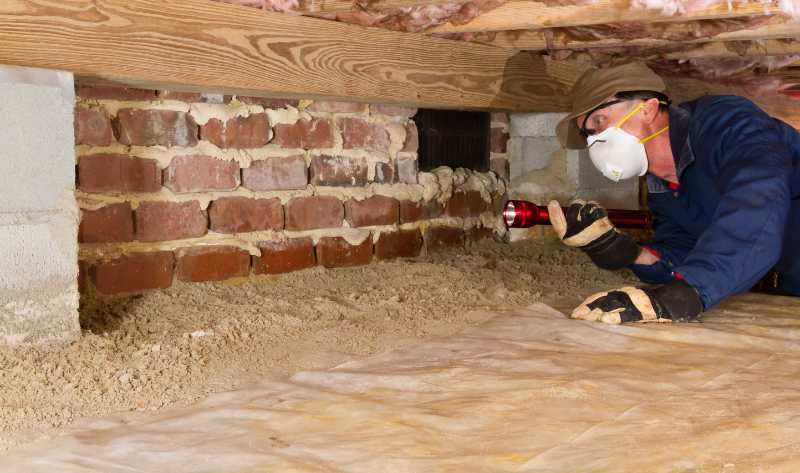 It’s important to install insulation to create an insulated, conditioned space below your house. This protects your HVAC ductwork and pipes from extreme temperatures. Spray foam insulation is often applied to the crawl space ceiling and walls to insulate and seal air leaks. Rigid foam board is another effective insulating option.
5. Humidity Control and Final Touches
It’s highly recommended to install a dehumidifier or HVAC air exchange system to keep your crawl space humidity level below 50-60% year-round. The result is a clean, dry, usable space you won’t have to worry about.
Maintenance and Long-Term Considerations
To keep your encapsulated crawl space working its best:
- Inspect annually for damage or mold, check the vapor barrier and the seals around openings.
- Continue termite inspections as needed.
- Maintain gutters and downspouts to direct rainwater away from your foundation.
- Manage surface drainage to prevent water from pooling.
- Monitor your crawl space humidity levels (30-50% is ideal).
- Maintain your dehumidifier by cleaning the filters and checking drain lines.
- Keep the vapor barrier and seals intact during access and maintenance.
- Address any new moisture issues, like leaking pipes or dripping ducts, immediately.
Protect Your Home with G&S Insulating
Crawl space encapsulation is one of the smartest upgrades you can make as an Arkansas homeowner. It improves indoor air quality, cuts energy bills, protects against pest infestations, and preserves your home’s structural integrity.
At G&S Insulating, we’ve been helping Arkansas homeowners and builders since 2001. Our team knows this climate and how to build crawl spaces that last. You can count on us for expert crawl space services for your Arkansas home.
Contact us today for your free estimate and see how G&S can help protect your home with crawl space encapsulation.
______________________________________________________________________________
References
Breda Pest Management. (n.d.). The role of crawl space encapsulation in pest prevention. Breda Pest Management Blog. https://www.bredapest.com/blog/the-role-of-crawl-space-encapsulation-in-pest-prevention#:~:text=Crawl%20Space%20Encapsulation%20for%20Effective,dry%2C%20inhospitable%20environment%20for%20pests
Encyclopedia of Arkansas. (n.d.). Climate and weather. Encyclopedia of Arkansas History and Culture. https://encyclopediaofarkansas.net/entries/climate-and-weather-4579/#:~:text=few%20mountains%20dot%20the%20landscape,grapes%20raised%20in%20%2065
Kansas State University Research and Extension. (n.d.). Dry basements and crawl spaces [Publication MF2809]. K-State Research and Extension Bookstore. https://bookstore.ksre.ksu.edu/download/dry-basements-and-crawl-spaces_MF2809#
National Drought Mitigation Center. (n.d.). Arkansas drought conditions and climate. Drought.gov. https://www.drought.gov/states/arkansas#:~:text=Arkansas%E2%80%99%20climate%20is%20primarily%20humid,late%20summer%2C%20decreased%20precipitation%20and
U.S. Department of Health and Human Services, Arkansas Department of Health. (n.d.). Molds in indoor environments: Health symptoms. Healthy Arkansas. https://healthy.arkansas.gov/wp-content/uploads/Molds_in_Indoor_Environments.pdf#:~:text=What%20symptoms%20can%20molds%20cause%3F,%E2%80%A2%20Nasal%20and%20sinus%20congestion
U.S. Environmental Protection Agency. (2021, January 19). Mold image library: Foundation drainage issues. EPA Mold Resources. https://19january2021snapshot.epa.gov/mold/mold-image-library_.html#:~:text=Image%3A%20Moisture%20issue%3A%20Foundation%20is,drain%20gutters%20are%20too%20short
U.S. Environmental Protection Agency. (2021, January 19). Mold image library: Rainwater management. EPA Mold Resources. https://19january2021snapshot.epa.gov/mold/mold-image-library_.html#:~:text=Moisture%20issue%3A%20Rainwater%20is%20falling,the%20foundation%20of%20this%20house
U.S. Environmental Protection Agency. (n.d.). The inside story: A guide to indoor air quality. EPA Indoor Air Quality. https://www.epa.gov/indoor-air-quality-iaq/inside-story-guide-indoor-air-quality#:~:text=Ventilate%20the%20attic%20and%20crawl,up
U.S. Environmental Protection Agency & U.S. Department of Energy. (n.d.). Designing closed crawlspaces. ENERGY STAR. https://www.energystar.gov/sites/default/files/asset/document/Designing%20Closed%20Crawlspaces.pdf#
U.S. Environmental Protection Agency & U.S. Department of Energy. (n.d.). Technology fact sheet: Crawlspace insulation. ENERGY STAR. https://www.energystar.gov/sites/default/files/asset/document/Technology%20Fact%20Sheet%20Crawlspace%20Insulation.pdf#
University of Arkansas System Division of Agriculture. (n.d.). Pest management training manual [Publication AG1154]. University of Arkansas Extension Service. https://www.uaex.uada.edu/farm-ranch/pest-management/docs/training-manuals/AG1154.pdf#:~:text=Crawl%20Space%20Houses%20Crawl%20spaces,in%20a%20structure%20and%20for