
When summer temperatures in Arkansas regularly climb past 90°F, energy bills tend to rise just as quickly. Air conditioners run longer and harder to keep homes comfortable, especially in Pulaski County and the greater Little Rock area. Most of Arkansas sits in IECC Climate Zone 3A, a hot-humid region where cooling loads dominate household energy use for months at a time.
The challenge is that heating and cooling already account for the largest share of energy use in most homes, according to the U.S. Department of Energy. When insulation is lacking or air leaks go unchecked, your system has to work even harder to overcome heat and humidity. The DOE estimates that sealing air leaks and adding insulation can save homeowners up to 20% on heating and cooling costs, or up to 10% on total energy bills. Without those improvements, you may be paying hundreds more each year just to maintain the same level of comfort.
The good news is that there are practical, proven ways to take control. This guide walks Arkansas homeowners through five energy-saving strategies, from HVAC maintenance and natural cooling techniques to insulation upgrades that create lasting results. The most effective ways to lower summer energy bills include maintaining your cooling system, using ventilation and window coverings wisely, managing your thermostat efficiently, upgrading insulation and air sealing, and switching to energy-efficient appliances. Of all these steps, addressing insulation gaps and air leaks provides the biggest long-term return on investment for year-round comfort and savings.
Not sure where your home is losing the most energy? A professional insulation evaluation can pinpoint hidden air leaks and insulation gaps that are driving up your bills.
1. Optimize Your Cooling System
 Properly maintaining your air conditioning system is the foundation of home energy efficiency during Arkansas summers. A dirty air filter restricts airflow, forcing your system to work harder than it needs to. The U.S. Department of Energy reports that replacing a clogged filter with a clean one can reduce your air conditioner’s energy consumption by 5% to 15%. Check filters monthly and replace them as needed, especially during peak cooling season.
Keep heat-generating devices such as lamps and televisions away from your thermostat. If your thermostat senses extra heat, it may signal your A/C to run longer than necessary.
Use bathroom fans after showers to remove excess humidity, and make sure kitchen and bath fans vent to the outside. Removing moisture helps reduce the load on your cooling system.
Finally, schedule professional A/C maintenance before the hottest part of the season. Routine service improves performance, extends equipment life, and ensures your system is ready to handle Arkansas home cooling demands.
2. Use Natural Cooling to Supplement Your A/C
Your air conditioner doesn’t have to do all the work. Installing window coverings to block direct sunlight is one of the simplest ways to reduce heat gain. The DOE recommends closing blinds, shades, or curtains during the day to lower indoor temperatures without increasing energy use.
During cooler mornings and evenings, open windows on opposite sides of your home to create cross-ventilation. This allows fresh air to circulate and gives your A/C a break.
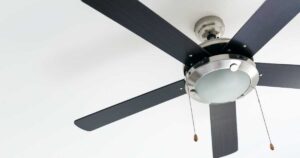
Ceiling fans can make a room feel about 4°F cooler, allowing you to raise your thermostat setting without sacrificing comfort. Just remember that fans cool people, not rooms, so turn them off when you leave.
The University of Arkansas Cooperative Extension also recommends using fans as a primary cooling strategy when possible to reduce reliance on air conditioning.
Strategically planted trees and shrubs can shade your home and further reduce indoor heat gain.
3. Manage Your Indoor Temperature Efficiently

Smart thermostat use plays a major role in lowering energy bills summer after summer. The DOE and ENERGY STAR recommend setting your thermostat between 75–78°F when you are home and raising the setpoint by about 7°F when you are away. You can save up to 10% on heating and cooling by adjusting your thermostat 7°–10°F for 8 hours a day.
Programmable and smart thermostats automate these adjustments, so you do not have to remember to manually adjust the temperature. That convenience makes consistent savings much easier.
If your home supports zoned HVAC, you can target cooling to the rooms you use most often and reduce energy waste in unoccupied areas.
4. Insulate and Air Seal Your Home
If you want the biggest long-term impact on energy savings, this is where to focus.
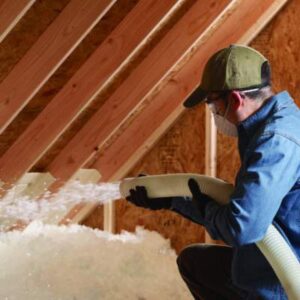
On average, homeowners can save up to 20% on heating and cooling costs by adding insulation and reducing air leaks. Seal cracks and openings around doors and windows to prevent warm air from leaking into your home. This is one of the most cost-effective upgrades you can make. Caulking and weatherstripping are simple air sealing techniques that often provide a quick return on investment.
A well-insulated home creates a continuous thermal barrier between your living space and the intense Arkansas heat. Attic insulation, crawl spaces, rim joists, and floors are priority areas identified by the DOE’s insulation guide.
Spray foam insulation offers a powerful combination of insulation and air sealing in a single application. Closed-cell spray foam is moisture-resistant, provides a high R-value per inch, and conforms to irregular surfaces around pipes and wiring. It helps control both heat and humidity, which is especially important in Climate Zone 3A.
Proper insulation does more than keep you warm in winter. It prevents heat gain in summer, reduces strain on your A/C, and helps maintain consistent indoor temperatures throughout your home.
5. Use Energy-Efficient Appliances and Lighting
Small changes can add up over time.
Lighting accounts for roughly 10% of home energy costs. Switching to LED bulbs reduces both energy use and indoor heat output compared to traditional incandescent bulbs.
Unplug electronics when not in use to prevent standby power drain, or use power strips to simplify the process.
Set your water heater to no higher than 120°F. Water heating can account for 14% to 25% of home energy consumption, and lowering the temperature can save energy without sacrificing comfort.
Wash full loads of laundry and dishes, and air-dry clothes when possible to further reduce energy use.
Frequently Asked Questions
Stay Cool and Save All Summer Long
Managing summer energy costs in Arkansas does not require major lifestyle changes. By focusing on HVAC maintenance, natural cooling strategies, smart thermostat use, insulation and air sealing, and energy-efficient appliances, you can significantly improve comfort and lower your bills.
Of all these strategies, insulation and air sealing provide the biggest and most lasting return on investment for Arkansas homeowners. Spring and early summer are ideal times to assess your home’s insulation before peak heat arrives.
Contact G&S Insulating today for a free insulation estimate. Our experienced team has been serving homeowners, builders, and commercial contractors across Little Rock, Springdale, and Jonesboro since 2001. Let us help you create a cooler, more energy-efficient home this summer.
References:
Arkansas Energy Code for New Building Construction. (2014). Supplements and amendments to the 2009 International Energy Conservation Code. Arkansas Economic Development Commission – Energy Office. https://www.adeq.state.ar.us/energy/resources/pdfs/2014-ar-energy-code-for-new-building-construction.pdf
U.S. Department of Energy. (n.d.). Air sealing your home. Energy Saver. https://www.energy.gov/energysaver/air-sealing-your-home
U.S. Department of Energy. (n.d.). Home cooling systems. Energy Saver. https://www.energy.gov/energysaver/home-cooling-systems
U.S. Department of Energy. (n.d.). Insulation. Energy Saver. https://www.energy.gov/energysaver/insulation
U.S. Department of Energy. (n.d.). Spring and summer energy-saving tips. Energy Saver. https://www.energy.gov/energysaver/spring-and-summer-energy-saving-tips
U.S. Department of Energy. (n.d.). Top 11 things you didn’t know about saving energy at home: Summer edition. https://www.energy.gov/articles/top-11-things-you-didnt-know-about-saving-energy-home-summer-edition
U.S. Department of Energy. (n.d.). Types of insulation. Energy Saver. https://www.energy.gov/energysaver/types-insulation
U.S. Department of Energy. (n.d.). Guide to home insulation. Energy Saver. https://www.energy.gov/sites/prod/files/guide_to_home_insulation.pdf
University of Arkansas System Division of Agriculture Cooperative Extension Service. (n.d.). How to cool your home on a budget – Summer savings series. https://www.uaex.uada.edu/life-skills-wellness/at-home-with-uaex/posts/finances/cooling_home_sss.aspx