On January 23, 2026, the Arkansas Public Service Commission approved a 23% rate increase for Southwestern Electric Power Company (SWEPCO) customers across Northwest Arkansas, adding approximately $24 per month to the average residential bill. That’s nearly $290 more per year coming straight out of your pocket.
The problem is, you can’t opt out of the rate hike. The U.S. Department of Energy reports that heating and cooling account for the largest share of home energy use, and that increasing insulation is one of the fastest and most cost-effective ways to reduce energy waste; for NWA homeowners already stretching their budgets, every kilowatt-hour wasted through an under-insulated attic or unsealed crawl space now costs 23% more than it did last year.
This guide explains which insulation upgrades give NWA homeowners the biggest return on investment, and how to offset much or all of that $290 annual increase by reducing the energy your home wastes.
SWEPCO’s approved rate hike adds ~$290 per year to the average NWA residential bill. You can’t change the rate, but you can control how much energy your home wastes. According to the DOE, homeowners can save up to 20% on heating and cooling costs by adding insulation to attics, floors, and crawl spaces and reducing air leaks. In IECC Climate Zone 4A (Benton and Washington counties), that means upgrading to R-49 attic insulation, sealing air leaks, and insulating crawl spaces—the three highest-impact improvements for existing NWA homes.
Not sure where your home is losing energy? A free insulation evaluation can show you exactly where every wasted dollar is going.
What the Rate Increase Actually Means for Your Energy Bill
The SWEPCO Rate Hike: What NWA Homeowners Need to Know
SWEPCO filed its rate increase application on March 28, 2025. After public hearings in December, including one in Springdale, the Arkansas Public Service Commission approved the settlement on January 23, 2026 (Docket No. 25-003-U), authorizing an $85.4 million revenue increase.
For homeowners, that translates to:
- About $24 more per month
- Roughly $290 per year
- A 23% increase over previous rates
This applies across the region, including Springdale, Fayetteville, Rogers, Bentonville, and surrounding communities experiencing a Northwest Arkansas electric bill increase.
Where That Money Actually Goes
Heating and cooling account for about 43% of your home’s energy use, according to the DOE.
That means roughly $125 of that $290 increase is tied directly to how efficiently your home holds temperature and is directly affected by insulation quality.
The rate itself is unavoidable, but how much energy your home wastes is entirely within your control. That’s where home energy efficiency improvements come in.
How Insulation Directly Lowers Your Electric Bill
The Case for Insulation Upgrades
The DOE’s Guide to Home Insulation states that homeowners can save up to 20% on heating and cooling costs, or up to 10% on total energy costs, by adding insulation to attics, floors, crawl spaces, and accessible basement rim joists, and by reducing unwanted air leaks.
Meanwhile, ENERGY STAR reports that homeowners can save an average of 15% on heating and cooling costs (approximately 11% on total energy costs) by air sealing and adding insulation in attics, floors over crawl spaces, and basements.
R-Value Targets for NWA Homes (Climate Zone 4A)
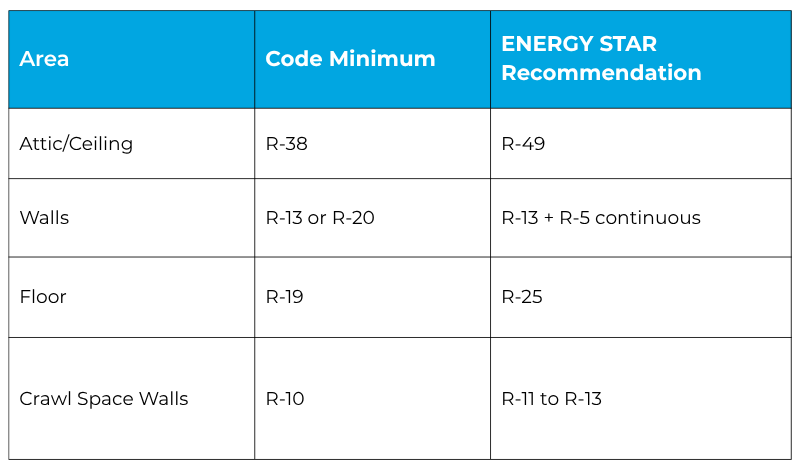
If your home hasn’t been updated to ENERGY STAR recommended levels, chances are it’s under-insulated. This chart compares Arkansas R-value recommendations.
That gap is exactly where energy loss happens, and where insulation upgrades for existing homes deliver the most value.
Which Upgrades Deliver the Best Return for SWEPCO Customers
Priority 1: Attic Insulation
Your attic is the biggest opportunity to cut energy waste. In winter, heat rises and escapes through an under-insulated attic. In summer, that attic becomes an oven radiating heat downward into your living spaces.
Upgrading from code-minimum R-38 to ENERGY STAR-recommended R-49 using blown-in cellulose or fiberglass is the most cost-effective first step. The DOE emphasizes that increasing your home’s insulation is one of the fastest and most cost-effective ways to reduce energy waste.
Priority 2: Air Sealing
However, insulation alone isn’t enough. If your home has gaps around wiring, ducts, or framing, air will leak no matter how much insulation you add, undermining even the highest R-values. That’s why air sealing Northwest Arkansas homes is critical.
The DOE notes that insulation and air sealing should be done together for best results, and that properly insulating your home not only reduces energy costs but also improves comfort.
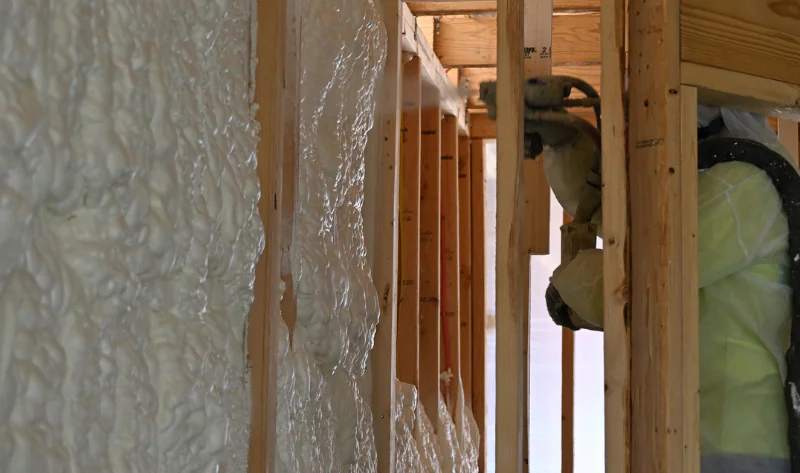
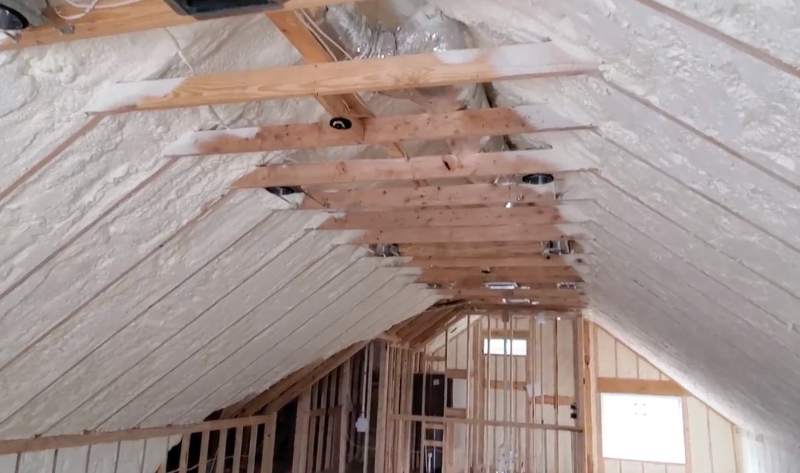
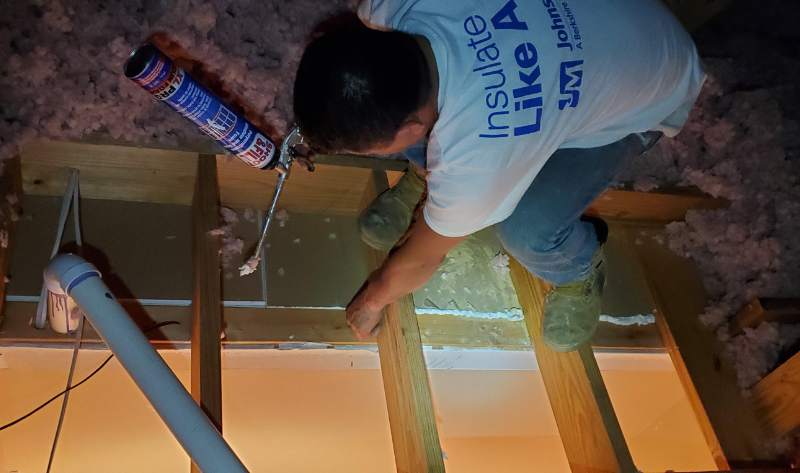
This is where spray foam insulation in NWA stands out. It insulates and seals air leaks in one application, making it ideal for rim joists, band boards, and hard-to-reach areas.
Priority 3: Crawl Spaces and Floors
Many NWA homes have vented crawl spaces that allow unconditioned air to reach the floor system, creating cold floors in winter and year-round humidity problems. This is one reason why ENERGY STAR recommends R-25 for floors over unconditioned spaces and R-11 to R-13 for crawl space walls in Climate Zone 4.
Upgrading to recommended levels and sealing the space can significantly reduce energy loss and improve comfort.
This is one of the most overlooked opportunities to lower energy bills NWA homeowners are dealing with right now.
Frequently Asked Questions
Stop Letting Higher Rates Cost You More Than They Should
Unfortunately, the SWEPCO rate increase is a done deal. NWA homeowners can’t negotiate it, opt out of it, or wait it out. The only thing they can control is how much energy their home wastes.
The biggest wins come from:
- Upgrading attic insulation to R-49
- Sealing air leaks
- Insulating crawl spaces
According to the DOE, those improvements can cut heating and cooling costs by up to 20%, enough to recover most or all of that $290 annual increase for many homes.
If your energy bills are climbing, now is the time to act.
Contact G&S Insulating today for a free insulation evaluation. Our team serves Springdale, Fayetteville, Rogers, Bentonville, Siloam Springs, and communities throughout Northwest Arkansas. Call (479) 751-6080 or contact us now to get started.
References
Arkansas Public Service Commission. “Order No. 17, Docket No. 25-003-U: In the Matter of the Application of Southwestern Electric Power Company for a General Change in Rates, Charges and Tariffs.” Arkansas Public Service Commission, 23 Jan. 2026, apps.apsc.arkansas.gov/pdf/25/25-003-U_391_1.pdf.
ENERGY STAR. “Methodology for Estimated Energy Savings from Sealing and Insulating.” U.S. Environmental Protection Agency, www.energystar.gov/saveathome/seal_insulate/methodology.
ENERGY STAR. “Recommended Home Insulation R–Values.” U.S. Environmental Protection Agency, www.energystar.gov/saveathome/seal_insulate/identify-problems-you-want-fix/diy-checks-inspections/insulation-r-values.
National Renewable Energy Laboratory. “Arkansas Residential Energy Efficiency Potential.” ResStock, U.S. Department of Energy, resstock.nrel.gov/factsheets/AR.
U.S. Department of Energy. “Guide to Determining Climate Regions by County.” Building America, Aug. 2015, www.energy.gov/sites/prod/files/2015/10/f27/ba_climate_region_guide_7.3.pdf.
U.S. Department of Energy. “Guide to Home Insulation.” Energy Saver, www.energy.gov/sites/prod/files/guide_to_home_insulation.pdf.
U.S. Department of Energy. “Insulation.” Energy Saver, www.energy.gov/energysaver/insulation.
U.S. Department of Energy. “Why Energy Efficiency Upgrades.” Energy Saver, www.energy.gov/energysaver/why-energy-efficiency-upgrades.